Bismillah Ar-Rahman Ir-Raheem (In the Name of Allah, The Most Merciful, The Most Beneficent)

by James S. Coates

Introduction

“And hold firmly to the rope of Allah all together and do not become divided. And remember the favour of Allah upon you—when you were enemies and He brought your hearts together and you became, by His favour, brothers.” — Qur’an 3:103

I have worked with a number of major Muslim organisations and movements in America. I have organised events with them, raised funds for them, defended them in the media, and built bridges between them. I have also been praised by them, shut out by them, and ultimately expelled by some of them. I have seen the best of our community and the worst.

I originally wrote this article in 2007, when these experiences were fresh and the wounds still raw. I have since stepped back from active involvement in the organised Muslim community in America. I am revisiting and revising this piece now because, while some things may have changed in the intervening years, structural divisions along ethnic, tribal, and movement lines do not disappear quickly. If even some of what I witnessed remains true, then naming it is still necessary. I offer this not as a definitive account of how things are today, but as a testimony of what I experienced and an invitation for others to reflect honestly on whether these patterns persist in their own communities.

What follows is an account of the divisions I have witnessed within the American Muslim community—divisions along ethnic, national, tribal, and doctrinal lines. I write this not to condemn but to name what many of us know but few will say openly. If we cannot name a problem, we cannot solve it.

The Prophet Muhammad (peace be upon him) said in his final sermon:

“All mankind is from Adam and Eve. An Arab has no superiority over a non-Arab, nor does a non-Arab have any superiority over an Arab; a white has no superiority over a black, nor does a black have any superiority over a white—except by piety and good action.”

We profess this. We must ask ourselves whether we live it.


The Divisions

The topics I address in this article are:

  1. Immigrant versus Indigenous American Muslims (not new converts)
  2. Immigrant versus American Muslim Converts
  3. Immigrants versus their American-born Children (2nd generation)
  4. Jamaat-e-Islami versus Muslim League
  5. Ikhwan versus other Movements
  6. Salafi versus other Madhabs (schools of thought)
  7. Tablighi Jamaat versus other Movements
  8. Summary of Alliances and Divisions

Please bear with me as I explore and explain these divisions. Some of what follows will be uncomfortable. But the Prophet (peace be upon him) told us that the best jihad is a word of truth spoken to an unjust ruler. Sometimes the injustice is within our own house.


1. Immigrant versus Indigenous American Muslims

In this divide, you have approximately 30% of the Muslims in America being indigenous to the Black American community—descendants of former slaves taken from Islamic areas of Africa. Many of them are in poor communities. Some are Muslims from birth through family lineage; others came through the Nation of Islam and, like Malcolm X, realised it was not true Islam, left, and joined the broader Muslim community. They form their own communities and sometimes intermingle with the general Muslim community at large.
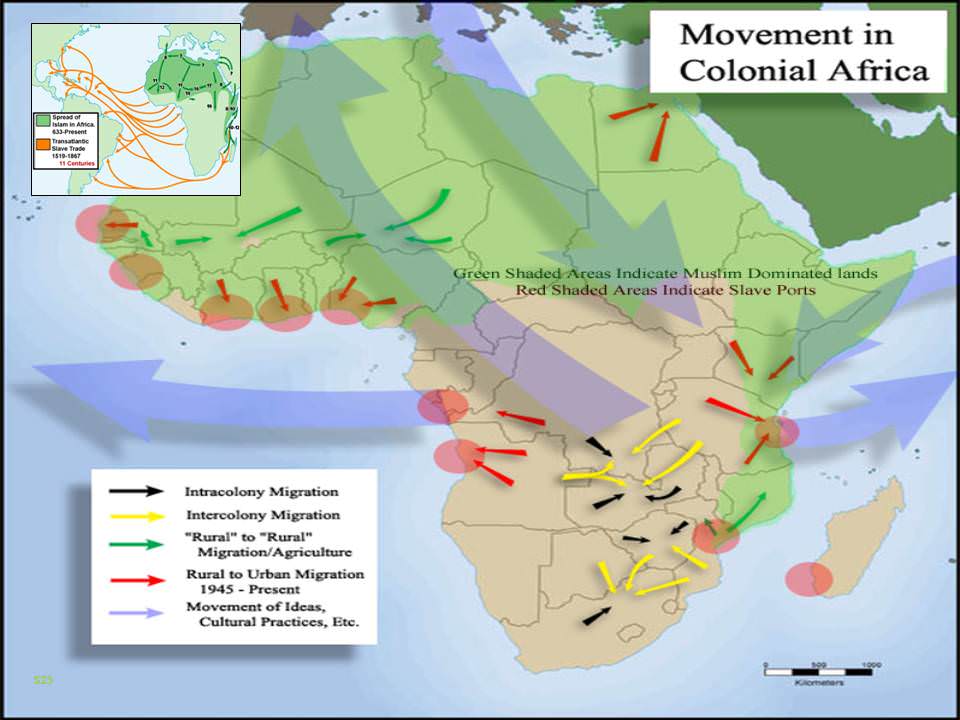
On the other side, you have foreign-born Muslims. Other than the approximately 2% of whites, Hispanics, and others who are indigenous or convert to Islam, the first-generation immigrant population makes up roughly 68% of Islam in America. Many came in the 1940s fleeing Communism in former Soviet bloc countries. Pakistanis came from South Asia fleeing famine and drought. In 1948 and 1967, the wars with Israel brought both Christian and Muslim Palestinians. The mid-1960s marked a significant increase of Muslim immigration from Pakistan, Turkey, Indonesia, and other Eastern and Arab countries, coming with the oil and other industries, seeking education or jobs.

What I Witnessed

I have seen a severe divide between indigenous Black American Muslims and immigrants—to the extent that they have formed entirely separate communities. When I was raising money for ICNA to build the Freeman Center in Houston, which is in a Black American community, I heard immigrant Muslims question why I was doing such a deed. One said, “Every time you see a black, they have their hand out.” It didn’t matter that the area had Muslims in it; they were indigenous former slaves and lumped into the larger stereotype of Blacks in America.

In the 1960s and 70s, Black Muslim communities, joining the fight for civil rights, attempted to ally with first-generation Muslims. According to one Imam in Houston, the first-generation community viewed Black Muslims as having serious doctrinal issues. Instead of attempting to correct such issues, they ostracised the Black indigenous Muslims and treated them as apostates—to the extent that Black Muslims had to form their own masajid (mosques).

At the Texas Dawah Conference 2003, a Canadian-born Islamic scholar told the conference that it was good they got together, but all he saw was Pakistani and Arab faces. He urged them to get indigenous Black American Muslims represented as an active part of the conference since they represent such a significant portion of the Islamic community in America.

So at the Texas Dawah Conference 2004, I attempted to heal this rift. I invited the Black indigenous Muslim community to be a part of the conference. The Black leaders I spoke to were eager to participate, even in a small way, and repeated to me the need to heal this rift—but were concerned with how the immigrant community would treat them.

When I spoke to the organisers, it was initially met with cautious optimism. The concern was what the Black Muslims would be “teaching” at the conference and whether it was sound doctrine. So it went through the ranks, and the main organiser dispatched an email putting a dead stop to it on the basis that the indigenous Blacks’ doctrine was not sound—even though they acknowledged the Black indigenous Muslims were Muslims in need of education in Islam. Instead of working with them in a way that addressed their concerns, they completely shut them out of the conference. There was no indigenous American Muslim representation on an official basis, and virtually none showed up to attend.

The conference is billed to the community as a unifying force to bring organisations together. It failed to bridge the gap between indigenous American Muslims (30% of the community) and the immigrants (the organisations represented at the conference).

The divide between immigrant and indigenous Black American Muslims is deeply felt and will not be healed soon, since the immigrant community continually views them as beggars, shuts them out, and ostracises them.


2. Immigrant versus American Muslim Converts

According to the majority of Islamic scholars, one of the primary reasons Muslims have to live in a non-Muslim nation is for the purpose of dawah (propagation of Islam)—making converts. Yet making converts in a non-Muslim land creates a paradox for immigrant Muslims, and the experience is often frustrating for new converts.

One of the best moments in a convert’s life is first becoming Muslim. It is a sense of freedom, belonging to a greater community, brotherhood, and guidance. As converts grow in their new faith, they acquire knowledge of Islam from the immigrant perspective, are inundated with an array of political ideas (typically anti-Western), and struggle to understand the inner workings of the faith, various cultures, and the Arabic language.

The Language and Cultural Barrier

When I became involved in the Islamic community, I struggled for clear answers from knowledgeable Muslims because of the language barrier. Most of the Imams and scholars in the West are not American, or at least were born in another country and immigrated to America, even if they acquired citizenship. They are ESL (English as a second language) people from Egypt, Pakistan, or elsewhere. The same applies for the majority of Muslims in the masajid. They speak English at an academic level but do not understand street lingo or common American English. They also have little or no connection to the plight of Americans, our history, or how our country operates outside of what they know from back home.

The prominent undercurrent of ideology in the masajid reflects people who come from countries with brutal regimes, where law enforcement agencies are arms of dictatorships, where there is constant turmoil and often poverty. Attitudes towards the West are dominant, and to oppose these attitudes publicly can put one’s conversion in question. First-generation Muslims in the masajid are on constant lookout for infiltrators, and new converts feel heavy pressure to go along with the flow and view anti-Western politics as Islamic, even when it is not.

One of the first things that happened to me was that I was questioned about my view of the Israeli-Palestinian crisis. Even though I somewhat agreed with the stance of most Muslims, I didn’t convert to Islam for such ideology. I wasn’t at the meeting for a contemporary political discussion but to learn about Islam. As time went on, constant inundation with various Muslims’ political ideology made me more comfortable with radically different ideologies since it seemed to be the norm. Eventually, I grew out of that. However, a large number of converts do not.

The “Lap Dog” Experience

New converts are seen by foreign-born Muslims as people who can help the plight of Islam among non-Muslims much easier than themselves. However, when it comes to matters of Islam, politics, or social integration, first-generation Muslims often view converts—no matter how educated or how long they have been Muslim—as uneducated in Islam and having little bearing on the direction of the community and its organisations. For example, as a Muslim now for 28 years, I am still told that I know nothing about Islam when it suits their point of view.

Converts often feel similar to how I felt since 9/11. When they needed us after 9/11, they thrust us in the public eye to defend Islam and put a clean, sanitised face on Islam and Muslims. However, when it comes to listening to our opinion on the direction of the communities, Islamic thought on issues regarding the religion, and running for or holding office in the organisation, they will not have it. It is extremely rare for an American Muslim to hold leadership positions—I know of only one case where a Black American Muslim was voted into local office as President of ICNA’s Houston Chapter, and that wasn’t without bitter rivalry.

I, and others I associated with, felt like a lap dog. I worked feverishly night and day, sacrificing time with my family while they enjoyed theirs, and it amounted to nothing. They love to pat you on the head and sing your praises when you’re in public making them look good, but they don’t want you to say anything meaningful or try to be a significant part of their immigrant-controlled organisations.

First-generation Muslims will profess that we are all equal in the sight of Allah. But they almost never relinquish control of their organisations to an American convert (unless they feel they can control him), nor are they hiring American Muslim scholars in the masajid. They will almost always hire scholars who are not American, and they will not allow many qualified American Muslims to give sermons in the masajid for Friday prayers or other events.

Double Standards

Furthermore, there is a pattern of double-speak. They condemn terrorists or extremists breaking our laws while supporting them through their actions. If a convert supports an immigrant, then great—but if you disagree, or speak to law enforcement about criminal activity in the community, they will brand you an infiltrator and claim you’re not really Muslim. Blood is thicker than water; it becomes tribal. They won’t play fair, following through on the teachings of Islam they instilled in you. They won’t give you opportunity to explain yourself. Instead, they will expel you from their organisations even though your work is what earned them a trusted name. If that is not all, they will post your name and photos everywhere in an attempt to threaten and intimidate you. It is exactly what happened to me.

The last I checked, Islam stood for justice, not lawlessness, and didn’t require us to protect lawbreakers simply because they are Muslims, nor on the basis they are from Pakistan, etc. It certainly forbids Muslims from threatening other Muslims.

The immigrant and convert divide is stark. It is not only different cultures meeting but different approaches and resolutions to life’s issues. It’s a different approach to Islam since most American Muslims are proud to be American and Muslim, while many who immigrated are here to benefit from America, their minds on returning home at some unknown point in the future, but not to become American or integrate into American society to show non-Muslims that we are not all terrorists. It’s almost as if things go south, they have somewhere else to go, but American Muslim converts do not have such options. It makes for a different worldview between us.

Where the Energy Goes

When I put on a Justice For Allah Rally in 2003, speaking out against Israeli atrocities against Muslims in Palestine, it was easy to get 400 people to show up and voice their opinion. But trying to get them to feed the homeless on a regular basis, give clothes to the needy, have a friendly meet with their neighbours, or do dawah work was worse than pulling teeth.

Save one instance that deserves merit: when they found out it would benefit them publicly to help the Hurricane Katrina evacuees, they came together and did some good work. But it wasn’t without some of them trying to take all the credit in front of the cameras from the others, and private threats from one organisation to the next. If it wasn’t for a Christian interfaith organisation (that I had a chance to work for as a Muslim liaison) that helped get past the petty rivalries, they would never have pulled it off.


3. Immigrants versus their American-born Children (2nd Generation)

A large portion of first-generation Muslims in the United States are not citizens and seem to have the intention of returning to their home countries after they receive their education or retirement. However, it is a common joke—and I heard this at the Texas Dawah Conference 2004—that immigrants come with the intention of returning to their countries, but every year they postpone it. Then, after years of delay, when they finally tell their kids (who were born and raised in the USA) that they want to move the family back home, their kids question the sanity of such an idea: why would they leave America when this is the only home they’ve ever known?

Cultural Clashes

Cultural values of the immigrant population are in stark contrast to those of their American-born children. The elder generation tends to adhere to archaic cultural values based from their home countries. An example of this is marriage. Many immigrant families have an understanding that they will bring their children back to Pakistan (or wherever they are from) to find a suitable spouse (oftentimes cousins) when their children are old enough. Furthermore, they tend to want to make the choice for their kids without any significant input or protest.

When presented with such an idea, the children typically dread such a concept. Their children, after all, grew up in America where this is not a cultural norm. Islamically, the children are right to consult the parents, but in Islam the parents are not the deciding factor on whom they marry. Islam encourages ethnic mixing and the freedom for children to choose their own spouse on the basis of piety.

The Generational Divide in the Masajid

Another divide is in the religious community. Second-generation children tend to grow up with Western values which allow for more free thought, and these are infused into their Islamic understanding of the world and the community. They are young, idealistic, and have a lot of energy. When children of immigrant Muslims grow old enough, they see the flaws in the community their immigrant fathers (“Uncles” they call them) are running—how it is run and how Islam is being taught—and have a strong desire to change it. They are frustrated when they see the community politics, backstabbing, underhanded behaviour, and when they are shut out of any meaningful effect or ability to hold office.

This division is very much like that of the division between converts and immigrant Muslims, except that the second-generation Muslim children are still very much united by ethnicity and their parents’ tribal affiliations that American Muslim converts do not have.

Muslim communities are seriously stifled from progress and growth due to the elder generation of first-generation Muslims’ power struggles, tribal warfare, false accusations, politicking to get rid of moderate Imams and scholars or those they just don’t like, seizure of power, destruction of property, and refusal to allow fresh blood into control of the governing and consultative bodies and the presidencies.


4. Jamaat-e-Islami versus Muslim League

An underlying divide among Pakistani immigrants in America, not evident to the general public, is a political divide originating in Pakistan. Jamaat-e-Islami is a religious and political movement in Pakistan that elevates and follows the teachings of Syed Maududi. It is a movement that aims to get back to the basics of Islam and has representation in the Pakistani National Assembly.

The Jamaat propagates its ideology worldwide in the masajid and founds organisations in various countries that reflect its ideology. In the United States and Canada, they have founded the Islamic Circle of North America (ICNA) and ICNA Relief. Since ICNA cannot operate as a political party in the USA and Canada, they have founded the movement as a religious organisation whose purpose is to propagate Islam according to its movement’s ideology.

According to an ICNA official that I spoke to privately on this issue, the Muslim League is the “other” party. They are the ruling class that originally received the handoff of power from the British after the ending of colonial rule and the subsequent founding of the nation of Pakistan. They are seen by Jamaat supporters as puppets of the West and a corruption of Islam in Pakistan.

The divide between these two groups is kept very private, but it is very evident in the Islamic community in America when one looks at the community politics in the masajid. This barrier is very real and originates long before the two parties immigrated to America.


5. Ikhwan versus other Movements

The Ikhwan are highly active people who engage in many facets of society. Like other movements, they propagate their ideology around the world in the masajid, but in addition they also propagate among Muslims in universities. The Ikhwan can be cautious about public statements regarding some of their ideology due to their Egyptian history of government persecution. However, they have aspirations of being politically active in the West and will engage in society and attempt to affect change positively through the political process.

In the United States, they have founded their organisation as the Muslim American Society (MAS), and in universities and schools they have founded the Muslim Students’ Association (MSA). They have also founded a political organisation called MAS Freedom Foundation and a worldwide relief organisation called Islamic Relief.

Working with the Ikhwan

The real division between Ikhwan and other movements in the American Islamic community is that the Ikhwan have a strong desire to be seen publicly and to be looked at by the Islamic community as being effective and moderate. However, in my experience, some can act as bullies in the community, pressuring other organisations to let them take the lead or take credit for joint efforts. Any event they are involved with becomes a struggle for other organisations to control, as well as a struggle over who actually is recognised in the end for their work and organisation. So other organisations find it difficult to work with them.


6. Salafi versus other Madhabs (Schools of Thought)

Among the various groups in the masajid are the Salafi. The Salafi movement traces its methodology to the Salaf—the first three generations of Muslims (the Companions, the Successors, and those who followed them). Opponents of the movement often call them “Wahhabi” after Muhammad ibn Abd al-Wahhab, a reformer in 18th-century Arabia, though Salafis themselves rarely use this term and generally reject it as a label designed to malign their movement.

The movement was founded during a time when Arabs in the Arabian Peninsula had distorted Islam to the point of reverting to old pagan ways. Its aim was to bring people back to Islam through sound teaching based on Qur’an, Sunnah, and the understanding of the Salaf. Eventually, the movement formed an alliance with the Saudi government, and it is traditionally associated with the Hanbali school of fiqh (jurisprudence).

Like other movements in Islam, Salafi teachings are propagated around the world in the masajid. It is among the most strict and literalist forms of Sunni Islam. It is not uncommon for Salafis to oppose becoming involved in the political process of non-Muslim countries, viewing it as a system of kufr (disbelief). So the only way many will engage politically is if an Islamic system of government is already established. Some Salafis view their religious methodology as superior to others, to the extent that they will pronounce takfir on other Muslims (declare them apostates) not part of their group—though this practice is condemned by mainstream Salafi scholars.

The Salafi are not recognised as a separate school of thought by mainstream Sunni Muslims, who recognise only four schools (Maliki, Hanbali, Hanafi, and Shafi’i). However, their strict methodology puts them in contrast with the general community at large. They are often very vocal in the masjid and propagate their way aggressively, which creates division.


7. Tablighi Jamaat versus other Movements

The Tablighi Jamaat is a movement whose origins are in India, begun during a time when Muslims were reverting to the ways of Hinduism. The purpose of the Tabligh is to do dawah (propagate Islam) among Muslims and call them back to Islam. It is their practice to leave behind family and friends occasionally for an extended period of time to travel from community to community to encourage people to adhere to Islam and recruit into their ranks. They typically just show up in an unsuspecting community, make friends, and stay with people they meet who feed and support them for the duration of their stay, or with other Tablighis. Sometimes they stay in the masajid themselves.

The Tabligh operate in the US and Canada as their own organisation with a hierarchy apart from most institutions. There is criticism among the general community that their teachings are from books containing weak hadith (teachings of the Prophet that cannot be confirmed as authentic) and thus are somewhat inaccurate. They are often not allowed to operate within the masajid without consent and sometimes without prior approval for what they will be teaching or books used in their sermons. Some communities have restricted them due to their transient lifestyles.

It is not uncommon for a new recruit of the Tabligh to be encouraged to abruptly leave their home to go on a two- or three-week mission to another community to propagate Islam (according to the Tabligh) or learn more about Islam and the Tablighi way.

The movement is rather large and largely made up of Indian and Pakistani members. However, the movement has gained considerable ground in the Black American Muslim community.


Summary of Alliances and Divisions

Ethnic and Generational Divisions:

  • First-generation Muslims versus indigenous American Muslims, converts, and their 2nd-generation children born and raised in America
  • Second-generation ethnic children of first-generation Muslims group together and often separate on ethnic lines from indigenous American Muslims and converts
  • Indigenous Black American Muslims follow the natural segregation lines in society when it comes to integration with other groups

Movement Alliances and Rivalries:

  • Jamaat-e-Islami (ICNA, ICNA Relief) is a religious movement allied with the Ikhwan in the USA (MAS). The Jamaat is opposed to the group representing the Muslim League in Pakistan, who have formed cultural centres to promote Pakistani culture rather than the religion of Islam.
  • The Ikhwan (MAS, MSA, MAS Freedom Foundation, Islamic Relief) tends to go it alone among all of the groups. Other movements are in constant struggle over how MAS controls, assimilates, and takes over their events. MAS (Ikhwan based in Egypt from the teachings of Syed Qutub) and ICNA (based in Pakistan from the teachings of Syed Maududi) have discussed merging their two movements in the United States and Canada. However, due to the stark nature of both movements, their cultures, and differing levels of Islamic knowledge, this has proven very difficult.
  • The Salafi movement is relatively isolationist while at the same time not ashamed to publicly and vocally oppose other movements. They are often academic scholars but can lack tact and the ability to deal with people without giving offence.
  • The Tablighi Jamaat operates largely independently, focused on internal Muslim revival rather than engagement with broader society or other movements.

A Path Forward

I have worked with all of these groups and know people and scholars from all of them. These findings are mine, based on my personal experience, talking with organisational officials, common folks, and scholars.

I write this not to condemn any group but to name what we all know exists. The Prophet (peace be upon him) said:

“The believers in their mutual kindness, compassion, and sympathy are just like one body. When one limb suffers, the whole body responds to it with wakefulness and fever.” — Sahih Muslim

We are not acting like one body. We are acting like competing tribes, each convinced of our own superiority, each protecting our own power, each suspicious of the other.

What would it look like to actually change?

  • For first-generation communities: Include indigenous Black American Muslims and converts in leadership—not as tokens, but as equals. Hire American-born scholars. Listen to the perspectives of those who grew up here.
  • For converts: Be patient but persistent. Document what you experience. Write books and articles on your experiences, they are valuable. Build alliances with second-generation Muslims who share your frustrations.
  • For second-generation Muslims: You are the bridge. You understand both worlds. Use that position to push for change from within.
  • For all movements: Cooperate on common causes without needing to control or take credit. The goal is the pleasure of Allah, not the reputation of your organisation.
  • For all of us: Remember that the person you are dismissing, ostracising, or threatening is your brother or sister in Islam. On the Day of Judgement, our tribal affiliations and organisational memberships will mean nothing.

“O mankind, indeed We have created you from male and female and made you peoples and tribes that you may know one another. Indeed, the most noble of you in the sight of Allah is the most righteous of you.” — Qur’an 49:13

May Allah help us to see past our divisions and become united for good causes. May Allah help us to forbid the evil and promote the good. May Allah forgive us where we have wronged each other, and may He guide us to be one Ummah as He commanded.

Ameen.


Article by BrJimC © 2007, revised 2026

What does it mean to switch faiths? What is it like for Muslim “converts” in particular? (For lack of a better term!) What are the typical highs and lows that new Muslims experience? What happens to those open-minded seekers that when joining a group are led to exclusivism and narrow-mindedness? In this episode Dr. Farhad Shafti and Veronica Polo are joined by James Coates, who helps us with these questions as he walks us through his own particular journey.


The Myth of Wahhabism

by James S. Coates


Introduction

Over the years, I have had the pleasure of working with many types of people in the Islamic community—a cross-section of ideologies, cultures and sects. I have taught classes with them, represented them in the media, and learned about them from them. When someone opens themselves up to learning about others, understanding comes, fears subside, and stereotyping dissipates.

One of the divisive ideological topics among Muslims is that between those with an agenda to malign the Saudi Kingdom and their brand of Islam dominant on the Arabian Peninsula by labelling Salafis “Wahhabi.” Interestingly, it is also a term propagated by anti-Islam haters to describe all of us Muslims.

I will explain how the term is misleading, divisive, offensive and, yes, even racist in its use by Muslims and non-Muslims alike—and should not be used. However, before I explain, it is important that anyone who discusses this topic understand the basic history of the Saud’s rise to power and the modern politic. There are a lot of supporting link references throughout the article for you to study if you really wish to delve into the topic.

The purpose of this write-up isn’t for the defence of the Salafi movement or the Saudi Kingdom. However, as a Muslim, it is my duty to draw the line where the facts and sound reason exist, to stand firm for justice. Far too often innocent bystanders (and new Muslims) are caught up in a vicious propaganda campaign of hate waged by some Muslim groups and non-Muslim hate groups on this topic.

“You who believe, uphold justice and bear witness to God, even if it is against yourselves, your parents, or your close relatives. Whether the person is rich or poor, God can best take care of both. Refrain from following your own desire, so that you can act justly—if you distort or neglect justice, God is fully aware of what you do.” — Qur’an 4:135


Basic History

Muhammad ibn Abd al-Wahhab was born and lived in ‘Uyaynah, Arabia from 1703–1792, though he spent many years abroad and taught in Basra, Iraq. He completed his education in Madina. In Iran, 1736, he taught against the ideas of various prominent Sufi leaders. The movement he founded in his lifetime never extended beyond Arabia, though its emphasis on Tawhid (monotheism) would later spread through educational institutions funded by Saudi oil wealth.

The Context of Decline

Since the sack of Baghdad in 1258 by the Mongols, the Islamic Empire struggled with decline. Europe, in the period after the Dark Ages, benefited from education in Islamic territories and began to increase with technological and cultural innovation. By the 1700s, it had fully experienced the Renaissance and began exporting this cultural innovation back to Islamic lands.

Seeing these things as corrupt Western innovation (bid’ah) of religion, Muhammad ibn Abd al-Wahhab began a peaceful (non-violent) revivalist response to the decaying beliefs, morals, and Islamic practice in the Arabian Peninsula. He preached the removal of polytheism from Islamic society and a return to the roots of the Salaf (ancestors). The Salafi movement was mainly concerned with issues of Tawhid (monotheism), shirk (polytheism), and Western modern innovative influence among Arab Muslims seen to be the cause of moral decay. Today, the movement views the world in much the same way.

The Saudi-Wahhab Alliance

In 1744, Muhammad bin Saud sought to use his immense military forces to found the first Saudi state but didn’t have the influence he desired among all of the people to secure his rule. Muhammad ibn Abd al-Wahhab was well known among these same Arabian tribes for his revivalist work. The two movements officially allied. Muhammad bin Saud married his son to Muhammad ibn Abd al-Wahhab’s daughter to seal the deal. Under the new Saudi state, Muhammad bin Saud was to be charged with political and economic affairs; Muhammad ibn Abd al-Wahhab was in charge of religious affairs.

The alliance became strong as the Sauds conquered much of the Arabian Peninsula. Religious enforcement (sometimes religious violence) was sanctioned and backed by the government of the newly formed state. To bolster Muhammad bin Saud’s forces, Muhammad ibn Abd al-Wahhab began to use his influence as a religious leader to recruit people to join the military for deployment in battlefield jihad on behalf of the state.

The Illusion of Orthodoxy

The mix of fundamental revivalist teaching coupled with strict state-sanctioned enforcement lends outsiders to have the “illusion” of orthodoxy in Islam where Salafis are concerned. The madhab (school of thought) dominant in Saudi Arabia where the Salafi movement originates is Hanbali. There are many schools of thought in Islam, and thus there is no “orthodoxy” in Islam.

What Salafis Actually Believe

Before addressing the slanders against them, it’s worth understanding what Salafis actually teach:

  • Tawhid (monotheism) as the absolute centre of faith—rejection of anything that could compromise the oneness of God
  • Return to the Salaf (the first three generations of Muslims) as the model for authentic practice
  • Rejection of bid’ah (religious innovation) that lacks precedent in the Qur’an, Sunnah, or practice of the early community
  • Literalist approach to hadith with emphasis on authenticated narrations
  • Political quietism (for most Salafis)—obedience to rulers and avoidance of political activism, which they consider sinful

Salafi groups generally do not partake in protests or even the political process, considering it a sin. They believe in obedience to government and are generally peaceable. Such an idea may work well in a monarchy like the Kingdom of Saudi Arabia.

However, as with any group, there are varying degrees of those (a minority) who grow disillusioned with passivity and become militant within the same ideology. Militant groups in all movements often go to the extent of replacing reputable established Islamic jurists with their own leaders in order to pronounce takfir (declaring disbelievers) on other Muslims to sanction and attack them for not acting on the same “triggers” deemed legitimate by the group. Duality is human nature, and within individuals or groups the reversal of moral value or opinion can happen for many reasons and often has triggers. It is not an event that is specific to the Salafi movement or Islam and happens all over the world.


Modern Politics

The Myth of Ideological “Export”

Attempts are often made to say that the Salafi movement is the “exporter” of extremist ideology because groups like ISIS are “Salafist,” but the facts do not support the idea of such sinister ideological “export.” The spread of terrorism misusing the Salafist ideology is incidental. ISIS is not the only terrorist group in the world. There is no evidence to support that all terrorist movements are “Salafist,” and most of these terrorist movements engage in acts that contravene the teachings of the movements from which they came.

The Root Cause: Foreign Policy

The root cause for the current terrorism crisis is simmering political instability caused by United States foreign policies that began in the 1980s. To advance the interests of the United States to fight communism, the US secured an agreement with the Saudi Arabian government (in coordination with Pakistan, Egypt, and Israel) to drive the communist Soviet Union from Afghanistan by funding, arming, and training extremist groups with US taxpayer money and resources.

The problem was made worse by Operation Desert Storm in 1990 and subsequent 12 years of sanctions that reduced a middle-class nation (Iraq) to one of the poorest in the world. These same CIA-funded and equipped jihadist assets based in Afghanistan became disillusioned with US foreign policy and later went on to attack the United States on September 11, 2001. The problem of global terrorism metastasised after the destabilisation of Iraq in Operation Iraqi Freedom in 2003 and continues to grow with US foreign policies that include endless bombing campaigns, attempts at nation building, and interventions across the Middle East, Asia, Europe, and North Africa.

The Birth of ISIS

Today’s Middle East crisis with ISIS is born directly out of political instability created by the United States invasion of Iraq, the attempt to “de-Baathify” the Iraqi civil and military services leaving hundreds of thousands of Sunnis formerly loyal to Saddam Hussein without a job, and removing the only security apparatus from the nation. The United States established a Shi’a-led Iraqi government that marginalised Sunni groups. Al-Qaida Iraq chose to capitalise on this, and in 2006 it was renamed Islamic State of Iraq. The group has rebranded itself many times since (ISIS/ISIL/IS; all the same group).

If countries are not stable, there is either no security apparatus or it is too weak to be effective. Lawlessness becomes the norm. Misuse of religion, iconography, and ideology is commonplace in unstable or lawless countries. In fact, a large number of the recruits of these criminal enterprises or gangs also have criminal histories. The most notable global misuses of religion in human history have been the pogroms, Crusades, and Inquisitions inflicted on the world by Christendom.

“Whether Sunni or Shia, Salafi or Sufi, conservative or liberal, Muslims—and Muslim leaders—have almost unanimously condemned and denounced ISIS not merely as un-Islamic but actively anti-Islamic.” — New Statesman

The Council of Senior Scholars of Saudi Arabia have issued a ruling against terrorism and groups like ISIS, irrespective of the political establishment’s support for using them in the proxy war to confront Iranian influence in the region.

State Terrorism

It’s also worth noting that in political foreign affairs most governments have employed or supported terrorist groups to achieve their goals. In the case of the United States, examples range from the jihadist groups fighting “godless” Soviet communism, to the Bay of Pigs disaster, to even funnelling arms and money to Al-Nusra Front in Syria (an Al-Qaida affiliate).

The current regional proxy war between Saudi Arabia (supporting groups like ISIS against Iran) and Iran (Hezbollah and Revolutionary Guards against the Saudi Kingdom) should be seen with these facts in mind as we try to make sense of and solve the crisis of terrorism. If one condemns one nation’s terrorism, we must face the fact and condemn our own nation’s terrorism equally.

The coordinated efforts by the United States, Israel, Pakistan, and Saudi Arabia (circa 1978) to fund, arm, and train these extremist groups to fight Soviet communism gave the initial credibility and rise to jihadist groups that we despise, like Al-Qaida and ISIS. The problem of terrorism (a tactic of war) lies primarily with government entities, not Islam or any one Islamic movement.

Now that we have waded through the politic and how Islamic movements have been distorted and misused for political gain of both Muslim and non-Muslim governments, let’s go on to draw the lines where they belong.


The Myth of “Wahhabism”

“Do not speak ill of one another; do not use offensive nicknames for one another. How bad it is to be called a mischief-maker after accepting faith! Those who do not repent of this behaviour are evildoers.” — Qur’an 49:11

“The Messenger of Allah said, ‘Do you know what is backbiting?’ The Companions said: ‘Allah and His Messenger know better.’ Thereupon he said, ‘Backbiting is talking about your (Muslim) brother in a manner which he dislikes.’ It was said to him: ‘What if my (Muslim) brother is as I say?’ He said, ‘If he is actually as you say, then that is backbiting; but if that is not in him, that is slandering.'” — Riyadh as-Salihin (Muslim)

Why Not “Taymiyyan”?

The Salafi do not follow Muhammad ibn Abd al-Wahhab. They rarely make mention of any of his teachings, instead referencing various hadith from common sources (Bukhari, Muslim, Ibn Majah, Tirmidhi, etc.). In fact, if one is lucky they may just find a biography of his life in a bookstore where Salafis patronise. Of the four Islamic schools of thought, their madhab is Hanbali. Why are they not named after the madhab—”Hanbalian”?

The Salafi rely on a host of scholarly opinions, but Orientalist scholars claim that they rely more heavily on Ibn Taymiyyah. If they reference Ibn Taymiyyah extensively and rarely if ever (I’ve never heard one in my 21 years as a Muslim) reference Muhammad ibn Abd al-Wahhab, how can they be “Wahhabi”? Why not “Taymiyyan”?

Followers of Muhammad (PBUH)

Salafis never call themselves Wahhabi. In fact, it is considered a derogatory term designed to malign their movement by making the false claim that their movement is synonymous with terrorism (much like Islam-haters do to all Muslims). Like any other Muslim with our pet ideologies or favourite movement, they are followers of the Prophet Muhammad (pbuh). Consequently, this is the same logic that is used by the Islam-hate industry to slander all Muslims.

A Tool of Islam-Hate

It is a term also used by many non-Muslims to promote anti-Islam agendas. The term “Wahhabi” means different things to different people. It means nothing (other than slander) to the Salafi because they don’t follow Wahhab. It is misapplied to them by other Muslims. It is a term applied by media pundits at times to identify terrorism. It is applied to all Muslims by the Islam-hate industry. The term is the source of confusion and hatred used not against just Salafi, but all Muslims—be one Sunni, Sufi, Shi’a, liberal or conservative, whatever your persuasion.

Sectarianism

Muslim political and religious opponents (like some Sufi, Shi’a, even fellow Sunnis and others) intentionally mislabel Salafi as “Wahhabi.” It is commonplace among those opposing Muslim groups with an agenda to stereotype and malign both the militant and the pacifist among the Salafi, Saudi citizens, or Arabs in general—painting them with a broad brush as the monolithic ideological source of all that is evil in the world (convenient for those swayed by alternate religious or national agendas).

It is also used by some Muslim groups with an agenda to disqualify, dehumanise, and demonise a fellow group of Muslims through labelling them extremists and spread unjustified fear and abhorrence for them. The fact is that we have already discussed the factors that brought extremist groups into existence and gave them credibility; no one group is the source of all evil. Muslim groups are being played in a game of divide and conquer by corrupt governments (Muslim and not) to advance their own interests.

No Clerical System

Catholics believe that Jesus himself is God. Yet not all Catholics follow the dictates of the Pope, despite the Pope being the head of the clergy and Jesus Christ’s divine representative on earth among Catholics. In Islam, there is no formal clerical hierarchy, let alone God’s divine representative on earth. It should be a no-brainer that not all Salafi side with the dictates of the Saudi political/religious establishment.

Like other religious groups of people, despite perceived religious hierarchy or clergy, they are still not homogeneous. Salafism has developed several schools of thinking:

“There are Salafis who have become close to centrism, which is based on combining the opposites, combining mind and matter, combining the spirit and the material, sometimes interpreting and at other times abstaining from interpretation, and combining intellect, action, religion, and politics. Moreover, we cannot disregard the development of the Salafis; in the past they did not talk about politics, but now they participate in the political battles…” — Sheikh Yusuf Al-Qaradawi

Just Plain Stupid

In its mislabelling, the efforts of these Muslim opponents to keep people away from the teaching of the Salafi are made futile. As people become familiar with the slanderous label and then enter the mosque or community centre, there is no one there that calls him/herself “Wahhabi”—but you will find people that refer to themselves as Salafi or following the Salaf.

So, mislabelling may seem like semantics, but all it does (besides the obvious slander and misleading people) is keep people from recognising them in the mosque. So, if one seriously fears their ideology so much as to want to preach to people against them, why not want them identified by their proper name? Again, a no-brainer here.

Discouraging Converts

Intentionally mislabelling them a name that they don’t call themselves is divisive. The slander creates needless trouble between religious leaders (and their followers) who have agendas of hatred for the Salafi, the Salafi who don’t want to be maligned, and those who want to learn about Islam.

It confuses people, especially new Muslims, who don’t know better and struggle to decipher Islamic groups that may be approaching them in the mosque. The agenda is more easily seen by new Muslims who get turned off by the divisiveness in a religion they chose—more than likely—to get away from this same kind of behaviour in a Church. Perhaps they just don’t have the time in their lives for such childish behaviour either.

You aren’t doing da’wah here; you are doing anti-da’wah. People will leave Islam and probably not even take the time to tell anyone. How is that going to look in our book of deeds?

“The record of their deeds will be laid open and you will see the guilty, dismayed at what they contain, saying, ‘Woe to us! What a record this is! It does not leave any deed, small or large, unaccounted for!’ They will find everything they ever did laid in front of them: your Lord will not be unjust to anyone.” — Qur’an 18:49


Racism and Cultural Supremacism

There is a conglomerate of groups that engage in this type of smear campaign. Western media and pundits, Islam-haters, and even other Muslims who use the term “Wahhabi” are using the term to identify a particular type of extremism (or terrorism) that they oppose. Yet there are no “Wahhabis.”

Who They Really Mean

Instead, what they are tacitly referring to without being forthright is:

  • “All Salafis,” or
  • “All Saudis,” or
  • In some cases, “all Arabs,” or
  • In the case of non-Muslim Islam-haters: all practising Muslims

The Colonial Legacy

Racism isn’t merely maligning someone based on ethnicity. It is a legacy construct of colonialism that places value on European civilisations over that of the occupied “savage” colonies. The implication is an “us versus them” attitude where all of “them” are savages worthy of hatred, pogroms, or civilising campaigns based on “their” grouping.

By the same token, these former colonies have begun using these “superior” attitudes against others based on ethnicity, nationality, madhab, religion, etc. It is an attitude of “supremacy” once particular to colonial Europe (that still exists among white supremacists today) which has been learned by the colonised, who are now using it against each other—in this case, against the mythical demon named the “Wahhabi.”

Racism is also not always expressed in explicit terms but tacitly. Racism may also entirely cast aside ethnic markers. This is known as “cultural racism.”

A Personal Experience

There are many groups of Muslims and Western non-Muslims that use the term “Wahhabi” in the derogatory sense to imply “all Arabs” or “all Saudis” are extremists. Recently, I experienced a group on Facebook (which will go unnamed).

It was a 7,000-member-strong Facebook group with a stated goal to “help new convert Muslims.” In reality, the group was mostly a cross-section of Asian Muslims who had repeated threads about the evil “Wahhabi” and how to defeat them. The discussions rapidly descended into hate speech against Arabs.

When prodded about what was meant by some of the anti-Arab statements, one of the members joked, “All Arabs are killing machines.” I reasoned with him that mislabelling them and grouping all of them together, coupled with making a statement like that, is what leads to hate speech against peaceful Salafi (fellow Muslims)—and it does no practical good to mislabel them.

Needless to say, he didn’t take that well. He sent me a message cursing at me, accused me of calling him a hater, and called on the admin to try to get me banned.

The point is that, though the group may have started with the best of intentions, the entire group was whipped up into a frenzy of “us versus them” to the point that no one could reason—and it didn’t take long. It was a flash response to challenging the social norm of anti-Arab (Muslim-on-Muslim) hate.

If I were to believe their psychological projection onto the Salafi, it would be something I might have expected from these so-called “intolerant” people they hated. It was no longer a forum of learning but a forum of anti-Arab hate speech. Stereotyping, educating new Muslims (their stated goal), teaching them not to paint people with a broad brush of blind hatred, giving reasons for objection to the Salafi movement—none of it mattered. Anyone who questioned their blind stereotyping was a threat and needed to be cursed at and strong-armed into silence.

What mattered more was that they are Malay and they don’t like Arabs; “our Islam is more valuable and valid while someone else’s is not.” It is “us versus them.” It’s the same thing Muslims often complain about when non-Muslims stereotype Islam, but on a micro level. I suspect, in addition to ethnicity, religious persuasion played an “us versus them” role in this hateful response also.

“The Messenger of Allah said, ‘Four are the qualities which, when found in a person, make him a sheer hypocrite, and one who possesses one of them possesses one characteristic of hypocrisy until he abandons it. These are: When he is entrusted with something, he betrays trust; when he speaks, he lies; when he promises, he acts treacherously; and when he argues, he behaves in a very imprudent, insulting manner.'” — Al-Bukhari and Muslim


Summary

Bottom line: it doesn’t solve the problem of extremism to mislabel Salafi (or anyone) “Wahhabi.”

Most Salafis, like most Muslims, are peaceful. Extremist militants do exist among them, but extremist militants have existed among Jamaat-e-Islami, Ikhwan, Sufi, Shi’a, etc.—and in all other non-Muslim faiths, even Buddhism. In all cases, most people (Muslims and those of the Salafi movement included) value peace and security, and militants are very much a small minority. Triggers and variations in these groups and their numbers are often relative to the politics in the region or globe and governments asserting their interests.

It’s okay to disagree with how Muhammad ibn Abd al-Wahhab did things, to criticise the Salafi or their scholars, to criticise how the Kingdom of Saudi Arabia does things, to think they have an ideological problem that needs fixing, or to have fundamental disagreements between each other—but maligning others by calling them by false names is unbecoming of a Muslim and fraught with error.

Instead, our language should be precise and accurate. Reasonable discussion, intellectual education, and debate need to happen for any of us to benefit or solve the problems that plague our global community.

The term “Wahhabi” is a manufactured-from-history and inaccurate name created by people with the intent to malign. It is incoherent, divisive, and slanderous. If one is a Muslim and sincere in their faith, they should ask themselves if this is the kind of thing Allah would want us to be doing. I suspect He wouldn’t.

“Invite to the way of your Lord with wisdom and good instruction, and argue with them in a way that is best. Indeed, your Lord is most knowing of who has strayed from His way, and He is most knowing of who is [rightly] guided.” — Qur’an 16:125


Article by BrJimC © 2016, revised 2026

Long History of Islamic Art

In dealing with the issue of photography, we naturally have to reach back and talk about Islamic art since they both deal with the thing people object to, images.  Art creativity has been around since long before the time of the Prophet Muhammad (pbuh), but as Islam expanded to new regions different attitudes towards the arts emerged.  As Islam spread rapidly throughout the middle east, the Umayyids (661–750CE) made some advances in the arts but were the predecessors of the Islamic Golden Age.  The Umayyids spread Islam as a dynamic religion which adapted to local cultures and the arts within the limitations of Islamic civilisation.

The Umayyids were a ruling tribe from the tribe Banu Umayya. The Banu Umayya were a tribe of Quraysh who converted to Islam during the time of the Prophet, the most notable of them Uthman ibn Affan who went on to become the third Caliph during the Rashidun period.  Uthman ibn Affan is considered the third of four ‘Rightly Guided Caliphs‘ who Sunni look to (in addition to Qur’an and Hadith) when interpreting Shari’ah.  Caliph Uthman is also attributed with completing the very first full edition of the Qur’an begun under Abu Bakr’s term as Caliph.

The Umayyid Caliphate was established by Caliph Muawiya I ibn Abu Sufyan who succeeded Caliph ‘Ali ibn Abi-Talib. The Umayyid period (661 CE – 750 CE) is the second to rule Islamic civilisation after the Rashidun Caliphate period (the four Rightly Guided Caliphs, 632 CE – 661 CE).  Islamic civilisation since thrived in the sciences and arts, some of which have survived until today.

Umayyid Caliphate 727 CE. Her features are those of an Arab woman. Archaeologists believe she is a songstress from the palace. Historical sources mention that songstresses were brought from the Hijaz region, in the western Arabian Desert, to sing in the Umayyad palaces of the Syrian Desert. (Source)

Umayyid Caliphate 734 CE. Mosaic of Hisham’s Palace representation of the lion attacking the gazelle. It is thought the be the peace that follows the victory of Islam.

The Abassids where direct descendants of Al-Abbas ibn Abd al-Muttalib, the youngest uncle of the Prophet Muhammad and overthrew the Umayyids in 750 CE.  The Abassid reign under Caliph Harun al-Rashid built upon the culture and sciences of the Umayyids.  The result was an explosion of advances in art, music, literature, science, medicine and much more that led Islam into a full blown Golden Age, while Europe plunged itself into the Dark Ages.  It was this age that Europeans traveled to Islamic lands to study in Islamic universities to acquire education which they would carry back to Europe.  Eventually, this led to the renaissance in 1300 CE pulling Europe out of the Dark Ages.

In the illustration on the right, a doctor and his assistant or patient stand on either side. (Source)

The Abbasid rule lasted from 750 CE until the Mongol invasion and sack of Baghdad in 1258 CE and killed Caliph al-Musta’sim.  Dynastic struggles brought about political instability and declining institutions but it was this moment that marked the decline in Islamic civilisation.  Islamic civilisation has not fully recovered since.

Traditionally, as seen in Islamic History, even human portrayals can be found in all eras of Islamic art.  In addition to humans, animals and plant portrayals are common even in Islam’s fourth most revered mosque, The Great Mosque of Damascus.  Since the earliest days of the Islamic empire Muslims have designed coinage and miniatures with depictions as well.

Islamic coin featuring human figure in art. American University of Beirut, Lebanon

Abbasid Bowl, 9th Century, Iraq. Qatar Museum of Islamic Art

Since the beginning, Islamic civilisation has been familiar with depictions of Allah’s creation. 1400 years of Islamic history tells us that these depictions were mostly permitted unless there was an element of shirk (idolatry) associated with it.  Even in the case of art that had idolatrous significance that became owned by Muslims, it was often marked but not destroyed. Human (or any) representation for the purpose of worship is shirk (idolatry) and is strictly forbidden.  However, the evidence shows that Muslims from all eras have never conclusively viewed representation of mundane figures as forbidden.

However, if we reach back to the Prophet’s example, although shirk is forbidden, we still do not see a total destruction or defacement of works of art among non-Muslim communities who were in alliances with Muslims.  The Prophet himself demanded that Muslims respect other faiths and even participate in maintaining and repairing their religious buildings, which were decorated with paintings, statues and other works that would naturally have items of religious value considered shirk by Muslims.  Examples:

“No one is to destroy a house of their religion, to damage it… Their churches are to be respected. They are neither to be prevented from repairing them nor the sacredness of their covenants.” – Prophet Muhammad, Promise to the Monks of St. Catherine’s Monastery Until the End of Days

“Assist in reconstruct (patch, remodel) their churches and monasteries, and this would be as aid to them in their religion and for their commitment to the covenant.” – Prophet Muhammad, Covenant penned in the Prophet’s Mosque by Ali bin Abi Taleb

In recent centuries an effort to re-establish the past glory of Islam’s Golden Age, many Muslims have come to believe that instead of building from where we were at the height of the Golden Age that we must dial back Islamic civilisation by viewing it all as bid’ah (innovation) involving varying degrees of shirk (idolatry).  In doing so, there is considerable effort put into regressive ideologies that do not consider the ‘larger picture’ of the facts of Islamic history, modern living, culture, science, economy and governance.  One such movement today, the Salafist movement, is preoccupied with forbidding the things that were once the pinnacle of Islamic civilisation from its earliest days to its decline at the hands of the Mongols.  This movement began 300 years ago in the mid 1700s and is rooted in Saudi Arabian history. The fundamentals of this revivalist Salafist movement seems sound on the surface. It is more often overly zealous to avoid what it identifies as unnecessary bid’ah (innovation) and ascribes shirk (polytheism) where none exists. It’s marriage to the Saudi Arabian government often is problematic when interpreting Islam as it applies autocratic ideology within the country and in the movement worldwide.  Since the earliest days, Islam has always been a more dynamic faith.

O people, beware of exaggeration in religious matters for those who came before you were doomed because of exaggeration in religious matters. – Sunan Ibn Majah 

There is nothing wrong with being overly cautious, however, this seemingly monastic outlook is unnecessary and shouldn’t be put off as the only correct Islamic view.  Furthermore, it is over-burdensome in a way Allah and the Prophet (PBUH) never intended for the believers.  Such puritan ideas in the arts (among other things) are themselves a destructive bid’ah (innovation) of religion in my view.

God wants ease for you, not hardship. He wants you to complete the prescribed period and to glorify Him for having guided you, so that you may be thankful. – Qur’an 2:185b

God does not wish to place any burden on you: He only wishes to cleanse you and perfect His blessing on you, so that you may be thankful. – Qur’an 5:6

A bedouin urinated in the mosque and some people rushed to beat him up. The Prophet said: “Leave him alone and pour a bucket of water over it. You have been sent to make things easy and not to make them difficult.” – Riyad as-Salihin (Bukhari)

Interestingly, one of the things that most Muslims do not think about is the representation of one celestial body (sometimes accompanied by a second) that were once used by pagan idolaters that exists on most Mosques, many national flags or religious accessories today (like carpets).  Like representations of humans, animals or plants, and unlike other symbols of faith, they are representations of Allah’s creation and people in the past have gone astray to worship them or use them for polytheistic purpose.

The Star and Crescent signifies victory, sovereignty and divinity. According to tradition, in 339 BC a brilliant crescent moon saved Byzantium (now Istanbul) from attack by Philip of Macedon. To mark their gratitude, the citizens adopted the Crescent of Diana as the city’s emblem. After Emperor Constantine converted to Christianity, Byzantium became a Christian city in 330 AD and was renamed Constantinople.  The Crescent was adopted from the goddess Diana and given a Star by the Emperor as symbolic of the Virgin Mary.

After 1299, during the reign of Sultan Osman Gazi of the Ottoman Empire, the Sultan had a dream of a crescent moon in every corner of the world with a “mighty wind, and turned the points of the sword-leaves towards the various cities of the world, but especially towards Constantinople.”  The dream then became a symbol of the Ottoman dynasty. When Constantinople was conquered by Mehmed II in 1453, the crescent came to represent both Islam and the Turkish empire.

It is understood by all Muslims that this is merely symbolic and has no religious significance or polytheistic merit despite its idolatrous origins.

The night, the day, the sun, the moon, are only a few of His signs. Do not bow down in worship to the sun or the moon, but bow down to God who created them, if it is truly Him that you worship. – Qur’an 41:37

Yet, the Crescent and Star decorate our Islamic societies in the same way as picture art since the earliest days of Islam (unlike the Crescent and Star, such Islamic art never had any polytheistic or religious merit).  We know with certainty that picture art decorated Mosques, town centers, palaces, homes, etc. since the Umayyids.  There is one similarity between these two things (Crescent decoration and art) that tie this up into a neat bundle of understanding and is perfectly in line with Quran and Hadith.  In creating and using these items, there is no intent to create a relic for people to venerate.  No shirk is involved.


Modern Photography

Since the development of the camera, there has been the ongoing debate over whether or not taking a photograph is forbidden or permitted in Islam, but there has been little understanding about what photography actually is.  There are two forms of photography addressed by the scholars, ‘still photo’ and ‘video’.

Though it shares all of the characteristics of imagination involved in creating a painting, photography today is not creating a picture, nor is it taking a picture.  A photograph is a reflection of a scene that already exists.  Photography is the control of reflective light bouncing off of a subject.  Controlling this light is similar to the control of water if you were to open a water tap and fill a jug for use at a later date. Photography is both an art form and a science.  Photography is applying the talent that Allah has given you to see something and adjusting the mechanisms to control light which in turn determines how it is recorded on a micro storage chip, resulting in a great photograph for you to consume (use) at a later date.  Here is how it works:

In the above diagram light rays already exist, even in total darkness.  You can adjust light with a flash or simply have a longer exposure.  Light bounces off or radiates from something in the world and is constantly travelling towards your camera. When you point the camera at a subject, the image is bouncing off of your mirror (or shutter in the case of mirror-less).  The aperture in your lens can be adjusted for a faster (larger) or slower (smaller) light setting. The shutter can be set slower to allow more light or faster to allow less light.  The sensor that will record the light can be set to more or less light sensitive.  When the settings are optimal the shutter is released for the specified time.  When the shutter is released, light that is already travelling into your camera continues on its way to the sensor.  The sensor is electronic and the light from the scene is interpreted by the CPU, converted to data and stored in your data drive.  The still photo is called a ‘frame’.  The data from the photo frame can be exported for data manipulation on your PC, stored or printed for whatever reason.

Whether you have a camera dedicated for television or movies, DSLR or mobile phone, all digital cameras are video capable. A video is a series of still photo frames that are taken with the correct lighting controls (aperture, shutter speed and sensor strength) that are recorded for playback into what is called ‘frame rate’.  When they are played back, the frame rate is the number of images that are played back, displayed or projected per second.  Although video can be viewed as a separate art form, it works in the exact same way that still photography works, with one exception:  audio.  Audio breathes life into the collection of rapidly projected photographs and is imprinted on what we call television, computer screens, tablets and mobile phones.  It can also be frozen by frame and printed the same as a still photo with the right software.  Although this is less quality and overlooked in place of more appropriate still photography, Ultra-High Definition is making for clearer television pictures as technology advances.

Photography has many beneficial uses and as with anything that exists can be abused.  It has some very relevant purposes, such as to communicate, tell a story, inspire, capture history, innocent retention of memories and challenge creativity.  All of this can be used for good causes like remembering lost loved ones, making a record of your life for your family, communicating beauty on various subjects, conveying emotions, identification for ID cards or social media profiles, journalism, education in all sciences, and much more.

Scholarly Opinions, are Opinions

In large part, scholars do ‘permit’ photographs, even if they forbid painting art. However, most Salafis, who have now propagated their movement worldwide with the support of the Saudi Arabian government, have taught that still photography is forbidden except for photo ID like passports, etc.  Interestingly, in the same stroke of a brush they claim that taking video is permitted.  In fact, there is no difference between the two from a photographic standpoint.

It seems a lot of us Muslims get amnesia when it comes to leaders like the Saudi Arabian King Salman and a number of other Muslim dictators across Arab ‘Muslim’ countries.  Their imposing portrait paintings and photographs are plastered all over our Islamic societies.  These types of paintings and photos are designed to remind us who is in charge, who we should fear and who we should admire, and I don’t think they have Qur’an, Sunnah or Allah in mind.  Still two wrongs wouldn’t make a right and someone’s disingenuous argumentation doesn’t allow us a free pass, so lets examine this topic further.

Saudi Arabian King Salman

The evidences the scholars use to come to these conclusions are not based in Qur’an.  There is no prohibition on drawing, painting, or creating art of any type in the Qur’an.  The core message of Allah to Muslims is Tawheed (Oneness) and in the Qur’an He warns us about engaging in forms of idolatry.  In other words, ascribing a supernatural quality, partnership, or divinity to corruptible things, either in Creation or that we create.  If one examines the totality of hadith on the topic, there is a clear line in Islam between permissibly and discretion that indicates to us at what point our intent becomes the idolatrous behaviour which is prohibited in the Qur’an.  Allah does not prohibit us from enjoying his creation through the arts, but limits us in our acts of divine adoration, supplication and worship to Him only.  What I am speaking of is plain in the Quran:

If any, after this, invent a lie and attribute it to Allah, they are indeed unjust wrong-doers. – Qur’an 3:94

Say: He is Allah, the One and Only; Allah, the Eternal, Absolute; He begetteth not, nor is He begotten; And there is none like unto Him. – Qur’an 112

Further to the discussion, according to the Qur’an Allah even blessed Prophet Sulaiman (a.s.) and his family to enjoy these things that were made for them.

They made him whatever he wanted- palaces, statues, basins as large as water troughs, fixed cauldrons. We said, ‘Work thankfully, family of David, for few of my servants are truly thankful.’ – Qur’an 34:13

The Qur’an is our primary source as it is the most authentic source.  The hadith are our secondary source because they are not the words of Allah but a series of chain narrations that have been authenticated and recorded hundreds of years later (longer than it took for parts of the Bible to be put on papyrus), hence all hadith must be looked at in light of the Qur’an.

The prohibitions imposed by scholars who prohibit photographic art are entirely based on a group of hadith that if seen together, in light of Qur’anic verses and the history of what purpose many images served in the time of the Prophet, they can be easily understood as they always have been since the time of the Prophet Muhammad when Islam was perfected.

This day have I perfected your religion for you, completed My favour upon you, and have chosen for you Islam as your religion. – Qur’an 5:3

Here is what the scholars say:

According to Yusuf Al-Qaradawi, the subject matter of a photograph is factor in prohibition.  For example, nude or semi-nude photographs, drawings or paintings would be forbidden because they go squarely against Islamic morals.  Such a prohibition would also include portraits of tyrants or people who are leaders or celebrities that propagate immoral behavior.  He also includes subject matter like religious symbols, such as crosses, idols, etc.

Sheikh Ahmad Kutty, says, “Photography as a medium of communication or for the simple, innocent retention of memories without the taint of reverence/shirk does not fall under the category of forbidden Tasweer [picture/image].

One finds a number of traditions from the Prophet, peace and blessings be upon him, condemning people who make Tasweer, which denotes painting or carving images or statues. It was closely associated with paganism or shirk [association of partners with Allah]. People were in the habit of carving images and statues for the sake of worship. Islam, therefore, declared Tasweer forbidden because of its close association with shirk. One of the stated principles of usul-u-Fiqh( Principles of Islamic Jurisprudence) is that if anything directly leads to haram [forbidden acts], it is likewise haram. In other words, Tasweer was forbidden precisely for the reason that it was a means leading to shirk.

The function of photography today does not fall under the above category. Even some of the scholars who had been once vehemently opposed to photography under the pretext that it was a form of forbiddenTasweerhave later changed their position on it – as they allow even for their own pictures to be taken and published in newspapers, for videotaping lectures and for presentations; whereas in the past, they would only allow it in exceptional cases such as passports, drivers’ licenses, etc. The change in their view of photography is based on their assessment of the role of photography.

Having said this, one must add a word of caution: To take pictures of leaders and heroes and hang them on the walls may not belong to the same category of permission. This may give rise to a feeling of reverence and hero worship, which was precisely the main thrust of the prohibition of Tasweer. Therefore, one cannot make an unqualified statement to the effect that all photography is halal. It all depends on the use and function of it. If it is for educational purpose and has not been tainted with the motive of reverence and hero worship, there is nothing in the sources to prohibit it.”

Imam Afroz Ali, writes, “…the dominant opinion of the modern Scholars of High Knowledge is that photography is permissible as long as they are of benefit and not for any harmful or prohibited purposes, and that photographs of humans and animals not be displayed [on a wall].”

Abdul Aziz bin Abdullah bin Baz (Source)

Sheikh Ibn Baz and other more restrictive scholars expressly forbids photographs and art, claiming that the areas that he deems ‘doubtful’ should be avoided. I’ve included a portrait of him here to illustrate that this type of outright restriction seems disingenuous.

The swiftness that Shiekh Ibn Baz and others exchange ‘avoidance’ (or other qualifiers) with ‘forbidden’ regarding photography is concerning.  Qur’an says:

Be a community that calls for what is good, urges what is right, and forbids what is wrong: those who do this are the successful ones. – Qur’an 3:104

God wants ease for you, not hardship. He wants you to complete the prescribed period and to glorify Him for having guided you, so that you may be thankful. – Qur’an 2:185b

You who believe, do not forbid the good things God has made lawful to you- do not exceed the limits: God does not love those who exceed the limits – Qur’an 5:87

Allah has never given a command forbidding picture making, but he has forbidden shirk, that we know in the Prophet’s time was more often associated with picture making.  In the same ease of saying it is a ‘doubtful’ area (since it isn’t mentioned directly in Qur’an, hadith and history seem to conflict) that the Sheikh forbids it, we can also say that it is permitted unless shirk is involved.  With the same logic to forbid it we can also make it permitted as something good for us, unless misused in ways against Qur’anic teaching of Tawheed.  It’s important to note also that where these scholars used to expressly forbid it in all cases, many have now changed their views regarding some of it.  Sheikh Yusuf Qaradawi has even noted this among some of these Salafist scholars:

“The Salafis also have developed in several jurisprudence issues, such as “photography,” which they used to consider one of the major crimes, but now they consider it allowed.”

My viewpoint

As a photographer, I would also say that there is legitimate reason to photograph some of these things Sheikh Al-Qaradawi mentions depending on circumstance.  For example, education, journalism, news reporting, etc.  The line to draw is in the intent of the photograph.  For example, a picture of a cross can tell a story that can illustrate to the audience a valid educational opportunity or simply can serve as a mere collection of memories on a holiday trip to the Vatican, etc.  Conversely, a portrait of a nation’s regime leadership is intended to portray them in a false light that exalts them, normalises them, reinforces their rule or washes out their crimes.  I agree with Sheikh Kutty that the line is drawn at the use and function of it.

According to the sum of the hadith that even Sheikh Ibn Baz lists, the Prophet Muhammad (pbuh) dealt with issues where the images were closely associated with promoting shirk, which was common in the culture of his time.  The intent of such art was towards advancing beliefs contrary to Islam.  Centuries of Islamic civilisation dating back to the earliest surviving examples from the 7th century through the Islamic Golden Age serve as an indicator of how this topic was interpreted by the early sahabbah [companions] and subsequent scholars. Surviving documents dictated by the Prophet Muhammad himself tell us how even in some cases Muslims were ordered to repair and maintain properties of other faiths that (as common in that time) would have had religious statues, paintings and other image art incorporated into their architecture. Such a notion is still completely in line with Qur’an that expressly forbids Muslims from engaging in all forms of shirk while serving a higher purpose of Islamic civilisation.

If we consider the sum of all hadith, the Qur’an, historical context since the time of the Prophet and sahabbah, agreements the Prophet Muhammad has made with non-Muslim groups and even later Islamic history leading into the Golden Age, we can see that the hadith that many people today use to prohibit all image making is really only prohibiting Muslims from the making of relics.

I’ve also found that many scholars do not understand what photography is and have not properly consulted the industry and educated themselves on the science.  When making rulings on any topic this is imperative. In the end we are responsible to Allah for ourselves. Photography is a beautiful art that has many purposes.  When you take photographs, consider your subject matter, is it haram?  What is the intent of the image, education, saving a memory?  In the end, you are the best qualified to chart the course of your life.  Don’t surrender your mind to others who wish to use the ‘just in case’ reasoning to ban photography.

We have bound each human being’s destiny to his neck. On the Day of Resurrection, We shall bring out a record for each of them, which they will find spread wide open, ‘Read your record. Today your own soul is enough to calculate your account.’ Whoever accepts guidance does so for his own good; whoever strays does so at his own peril. No soul will bear another’s burden, nor do We punish until We have sent a messenger. – Qur’an 17:13-15

My view is that if you feel you need to go that extra mile to avoid something, then do it. However, such personal convictions shouldn’t be imposed on others. It could be that Allah has permitted it, as I believe is clearly shown in in light of all of the facts of Qur’an, hadith and history.  The one who does not transgress the limits set by Allah (shirk) is exercising a creative right given by Allah to enjoy for a better purpose. There are things Allah has made clear and other things He has not.  Of the things He hasn’t made clear He has left us room for growth. Both the conservative and liberal thinker can be right within the confines of what Allah has set out for us in the Qur’an.  In the end, we must have faith in Allah that He is the God He says He is, the Most Merciful.  Niyyah (intentions) is the foundation for every act in Islam.

Messenger of Allah said, “The deeds are considered by the intentions, and a person will get the reward according to his intention. So whoever emigrated for Allah and His Messenger, his emigration will be for Allah and His Messenger; and whoever emigrated for worldly benefits or for a woman to marry, his emigration would be for what he emigrated for”. – Riyad as-Salihin [Bukhari and Muslim]

Allah would, however, raise them according to their intention. – Sahih Muslim

Pray: Muhammad Berkati, Indonesia, Arts and Culture; 2015 Sony World Photography Awards

Allah has given us a beautiful gift and it should be used for His glory and our enjoyment.  An art that portrays a sense of skill, pride, joy and beauty in the world is not forbidden from Allah, it is a gift of Allah.

And (He has created) horses, mules, and donkeys, for you to ride and use for show; and He has created (other) things of which ye have no knowledge. – Qur’an 16:8

Article by BrJimC © 2017

KTRH Houston Channel 11 Up Close segment featuring Jim Coates.

In 2003, Ahmed Ali of The Saudi Institute, a watchdog organization in Washington DC targeting the Saudi government was behind a vicious hate campaign in a series of articles and media outlets.  He based his erroneous claim on one of the speakers who was invited to speak via teleconference from the the Saudi Kingdom. The claims were that the Texas Dawah Conference was Saudi funded, supported Osama bin Laden and promoted antisemitism. Mr. Ali provided to the media a dubious translation that he made up of a supposed secretly recorded tape of the speaker, Allamah ibn Jibreen, inside a Saudi mosque.  The Houston Chronicle’s independent arabic translator could not verify what Mr. Ali was claiming or to what the translation was referring because it was such a poor quality recording.

Later, due to a lot of bad press we were getting in the news and on the radio, I called up local Houston radio KTRH to discuss the matter. The conservative talk show host demanded to get to the bottom of this and thought he would roast me alive on air.  So, I took him up on his offer and he brought live on air Mr. Ahmed Ali and myself, Sheikh Waleed Basyouni and the hosts own independent translator.  The translator agreed with myself and Shiekh Waleed that the audio was too poor of a quality to distiguish the exact translation and who the voice was speaking about.  It became clear to everyone on air that Mr. Ali made up the translation. He became enraged on air and hung up in shame. The radio host never brought up the issue again.


Houston Chronicle, City and State, Dec 17, 2003

Interacting with the American Muslim Community is a program that I designed, managed and taught. It was a highly successful program that received rave reviews from attendees and was in the news media multiple times.  It was approved by two prominent scholars in Houston, the leadership at the Islamic Circle of North America and the Islamic Society of Greater Houston. Houston police officers were invited to attend these monthly Houston Police Academy accredited classes to further department elective ongoing education at the Islamic Dawah Center founded by Houston Rockets basketball star Hakeem Olajuwon in downtown Houston.

The video contains two news clips resulting from press releases that I sent out telling about my police department program. The first interview was held a couple months after the success of our pilot program. The pilot was held with members of the Houston community including leaders from the Jewish community, the Houston mayor’s office, the US Department of Justice and many more attending. Shortly after, a second press release was sent and I invited Hakeem Olajuwon to attend to help publicize the program. The interview with Hakeem Olajuwon on Fox News is seen in the second half of the video.

The newspaper clipping below is a second appearance by Hakeem Olajuwan to visit the officers attending the program.

The article below that (Badge & Gun) is one of two articles by the Houston Police Officers Union to discuss the groundbreaking program.

Law enforcement program designed and implemented by James Coates

Hakeem Olajuwon kicks off the pilot program for us. Houston Chronicle City & State Apr 17 2003


Badge & Gun: April 2003


HPD is working with the Jewish and Muslim communities to educate a growing number of officers about hate crime causes and methods of prevention

BY TOM KENNEDY

Susan Llanes-Myers put into words what every police officer must have figured out a long time ago.

“Police officers,” she said, “are the first responders to hate crimes.”

Llanes-Myers, the daughter of a Texas Ranger, deals with hate education every workday. She is executive director of the Holocaust Museum Houston, where exhibits and educational programs are dedicated to teaching each visitor how hate can intensify and destroy millions of human beings.

The Houston Police Department has been taking a very productive advantage of the Museum’s educational program and continues to use the police-friendly facility to teach officers more and more about hate and hate crimes.

Several years ago, the Houston Police Academy’s Bill Hoffman saw the need to develop a partnership with the Holocaust Museum to teach Houston police officers more about hate. He figured, correctly, that officers were open to an off-site location for such an educational opportunity.


The Subject of Hate

Llanes-Myers worked with him and the HPD to set up an eight-hour course entitled Hate Crimes and Hate Groups – a Holocaust Perspective. Now the once-a-month elective usually draws a capacity crowd (60 persons).

Llanes-Myers is the lead teacher and includes a student session with a Holocaust survivor and concludes with a Museum tour.

“Our mission is to use the Holocaust Museum as a backdrop to hate in society,” the former public school teacher explained. She describes the course as “a marriage of past historical events and current events that uses the Holocaust to branch out to the hate groups of today.”

Adolph Hitler strongly pounded home hate on European soil 60-something years ago. Today, Llanes-Myers contends hate goes a long way and will intensify if more people are not educated on the subject.

Her course, for example, produces facts showing that there are at least 3,000 hate sites on the Internet.

Hate also is an educational subject that has drawn the intense interest of HPD Officer Steve Smith, assigned to the human relations unit at the Houston Police Academy since 1993.

Smith, a primary believer, supporter and encourager in the HPD/Holocaust Museum courses, said the course inspired him to envision a similar concept. Instead of just focusing on educating officers about the Jewish targets of hate over the centuries, Smith successfully sought to set up a course featuring the Muslim community.

Muslims everywhere have been targets of hate ever since the tragic events of Sept. 11, 2001. Although Osama Bin Laden’s ruthless band of 5,000 Al-Qaeda followers in no way represent the Muslim faith, sincere believers bore the brunt of often violent and hateful reactions.

“In November of last year,” Smith recalled, “it came to mind that maybe we need to do some training with the Muslim community.”


Smith’s Productive Efforts

He contacted the Islamic Circle of North America, a local group, and the Islamic Da’wah and soon got strong support from none other than Houston basketball legend Akeem Olajuwon. The Da’wah is located in an historic bank building in the 200 block of Main Street and receives strong financial backing from Akeem.

“Officer Roman Chavez, who works at the academy, told me about Akeem,” Smith said. “I visited with Akeem and asked if he would be interested. He said it would be a great thing to do. He wants to do more education about the Muslim community.

“It took the efforts of both Akeem and the HPD to develop this training.”

Smith also had the support and dedication of Llanes-Myers and the Holocaust Museum, as well as local Muslim spokesman Jim Coates.

Coates is a former Baptist Christian married to a woman who has been a Muslim since birth. He reverted to Islam when he met Fatimah Bhutan in his hometown of Chicago and the couple moved to Houston, which had been Fatimah’s home in past years.

Coates became a spokesman for the local Muslim community several months after 9/11 when hate crimes against Muslims were rampant because what American society didn’t know was unjustly hurting a religion.

He said Houston’s Muslim leaders decided to launch an unprecedented education campaign. Part of the ensuing process included a billboard on the North Freeway advertising a telephone number to call for information about Islam.

Smith saw the billboard, called the number and got to know Coates. After meeting with Coates and Llanes-Myers to develop the course, Smith followed their advice.

“We had the Muslim and Jewish communities kind of assisting each other in the development of this training, both having the same concerns about hate crimes or hate in the community,” Smith explained, “and you’ve got HPD in the middle facilitating, trying to bring these two communities together.”


A Success Story

It worked. Today’s story is a success, with HPD developing stronger ties to both communities as well as an improved understanding of the hate crimes that affect them.

Llanes-Myers said, “When HPD realized there was a problem, they turned to us to see how they could do it.”

She and the Museum were gracious about providing start-up help. She monitored the first class in January, led by Coates at Akeem’s Da’wah.

Coates, a truck driver for a Houston Chronicle contractor, quickly tried to clarify basic myths. Muslims, for instance, don’t meet in “mosques,” but rather in masjids.

By far his highest priority was – and still is – to stress that Osama Bin Laden and his Al-Qaeda followers do not represent the Muslim faith at all but use Muslims to further their terrorist goals.

As far as the course, Coates said, “We didn’t want to be teaching religion. We geared it to teaching law enforcement officers how to react to Muslims and understanding their culture, which is directly linked to their religion.

“Steve helped refine it and our pilot took place in January.”

Smith said the course teaches many basic lessons and could provide many suggestions of ways to better deal with the cultural ramifications.

Example?

Muslims are required to pray at least specified five times every day. They are not always the exact time each and every day.

There have been reports of Muslims acting suspiciously, such as kneeling on small carpets in a parking lot near a vehicle – a situation that seems suspicious. They are not planning to bomb a building; they are praying.

“HPD must work to have a stronger relationship with the Muslim community,” Smith said. “If Dispatch knows the prayer times, they (dispatchers) will know and the officers will know (the reason for kneeling on carpets in parking lots) and have a better understanding.


The Benefits

“As we have classes we’re learning more things that might be of use,” he said.

Coates sees the course as one very effective method to prevent hateful acts against an often-misunderstood religion. He is optimistic about Houston overall, calling it “different.”

“Muslim communities around the country have undergone great harassment,” he explained. “But here we have had a lot of good support from communities, particularly the Jewish community, and we haven’t had that many hate crimes.

“It is very important to get this course up and running at this time in order to help solve the problem of terrorism. Our relationship with law enforcement will be better and I think that’s very important to both sides.

“If you decided to isolate the Muslims, you will always have a problem trying to police that community. You will always be looked upon as an outsider.”

But for police officers to reach out to them and learn about them in places like the Da’wah is a step in the opposite direction – a positive direction, not a hateful one.


http://www.hpou.org/badgeandgun/index.cfm?fuseaction=view_news&NewsID=71

http://www.hpou.org/badgeandgun/index.cfm?fuseaction=view_news&NewsID=72